
1. Safety First: Move Off the Road
Don’t try to inspect your bike in the middle of the lane. Move to a safe pavement or verge.
- Get to a safe spot: Never inspect your bike in the middle of a busy lane. Move to a pavement, verge, or cycle path.
- Check yourself: Adrenaline can mask pain. Look for cuts, bruises, dizziness, or joint pain. Minor injuries like “road rash” may seem small but should still be treated.
- Inspect your helmet: If your helmet took a hit, it may no longer offer protection. Replace it if there’s any sign of damage.
2. Document the Scene (Crucial for Claims)
Whether you are claiming through insurance or seeking compensation from the council, evidence is everything.
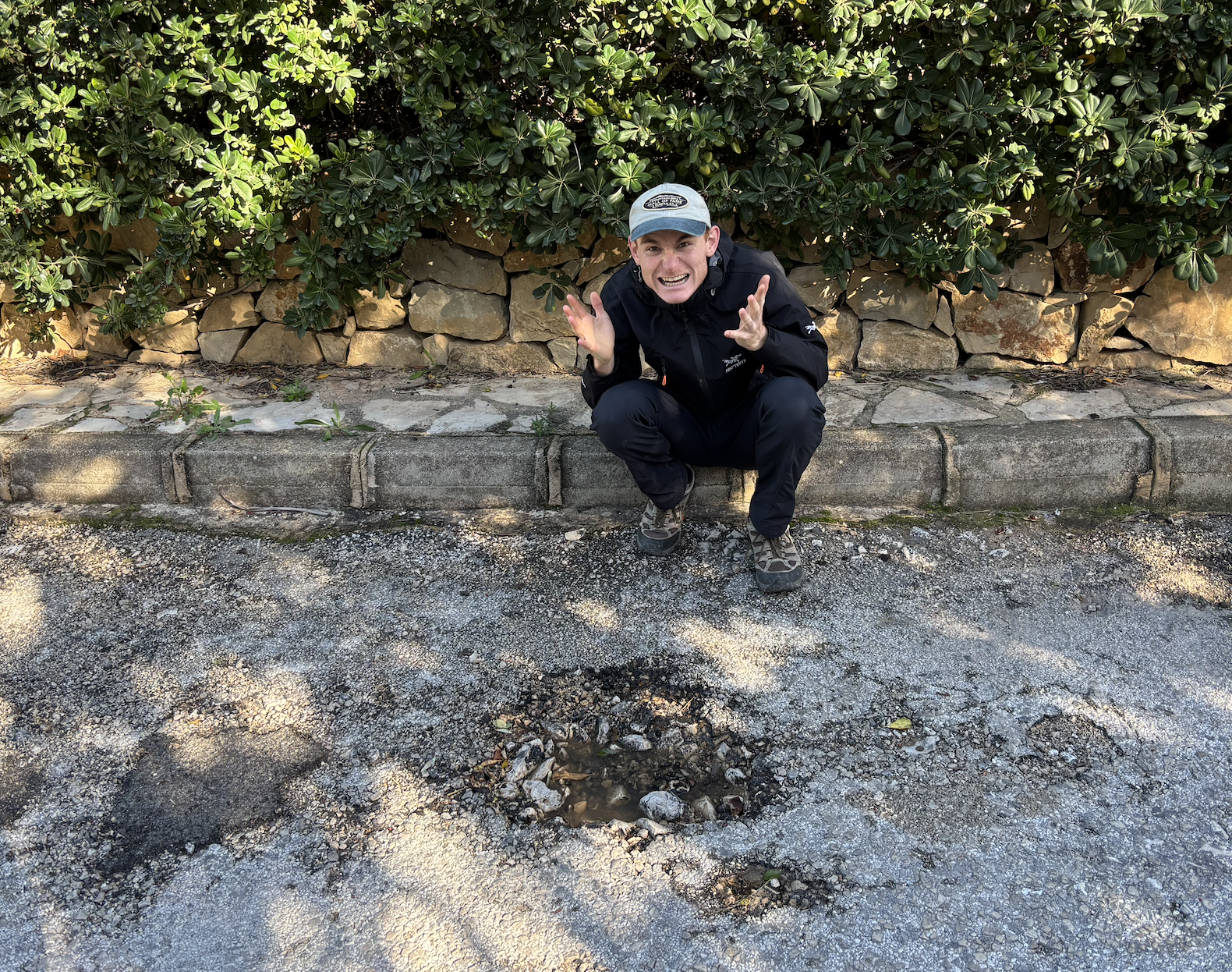
- Photograph the pothole: Use an object (like your water bottle or pump) inside the hole to show its depth and scale.
- Capture the location: Take wide shots showing road signs, landmarks, or nearby structures.
- Note the time and weather: Wet roads, poor visibility, and weather conditions all impact your claim.
3. Perform an "M-Check" on Your Bike
Even if your bike looks fine, structural damage may not be visible. Check these four areas:
- Wheels: Spin them to see if they are "true" (wobble-free) and check for cracks in the rim.
- Tyres: Look for sidewall bulges, punctures, or “snakebite” marks.
- Frame & Forks: Inspect the head tube and fork blades for hairline fractures, especially on carbon frames.
- Points of Contact: Ensure your handlebars and saddle haven't slipped or cracked from the impact.
4. Report the Hazard to Local Authorities
Reporting potholes helps prevent future accidents and strengthens any potential claims.
- In England/Wales: Use FixMyStreet or the Gov.uk tool.
- Why it matters: You can only successfully claim compensation from a council if you can prove they were already aware of the hole and failed to fix it.
5. Check Your Insurance Coverage
If the damage is significant (e.g., a cracked carbon frame or smashed wheelset), it’s time to look at your insurance.
- Major damage: Cracked carbon frames, bent forks, or smashed wheelsets often require professional repair.
- Insurance coverage: Policies like Laka cover incidents while the policy is active. Note: you cannot purchase insurance after the accident to cover past damage.
- Pro tip for new riders: Having insurance in place before your next ride can prevent the cost of pothole damage from derailing your cycling plans.
Important Note for New Riders: Standard insurance policies, including Laka, cover incidents that happen while the policy is active. If you've just had an accident and don't have insurance, you cannot take out a policy to cover past damage. However, having a policy in place before your next ride ensures that the "thwack" of a pothole doesn't result in a massive repair bill.
Is your cover pothole proof?
Get an award-winning bicycle insurance cover with Laka. Protect against theft, accidental damage, loss, & more. Ride free knowing Laka has your back.
GET A QUICK QUOTE